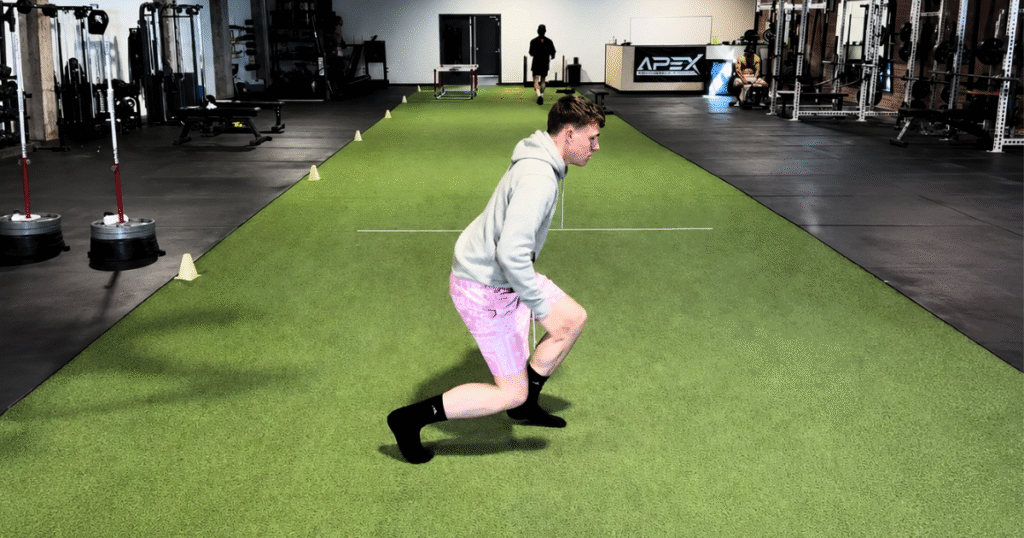
How Poor Landing Mechanics Increase Injury Risk
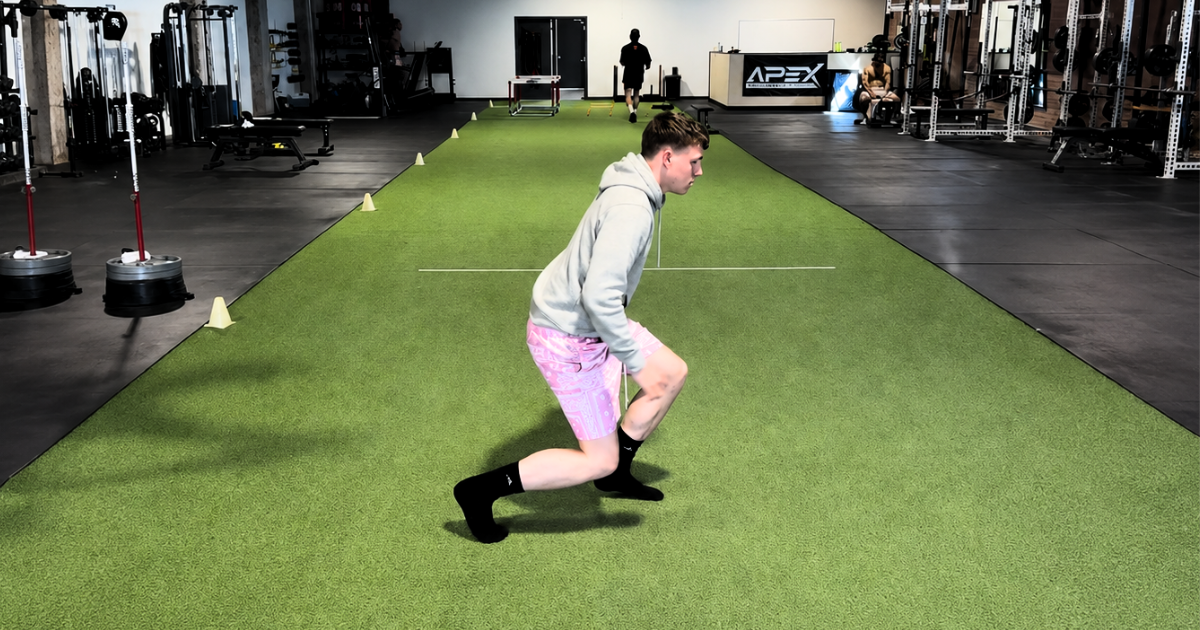
Athletes spend countless hours working on strength, speed, and conditioning.
They train to jump higher, run faster, and become more explosive. But one of the most overlooked skills in sports is something that happens every time an athlete leaves the ground.
Landing.
Whether you’re grabbing a rebound, going up for a block, attacking the basket, or changing direction after a jump, every landing places significant stress on the body. When landing mechanics are efficient, the body is able to absorb and distribute force effectively. When landing mechanics break down, that force can place excessive stress on the knees, ankles, hips, and other structures throughout the body.
For athletes recovering from injury, poor landing mechanics can become an even bigger concern.
The reality is that injuries rarely happen because of a single movement. More often, injuries occur when multiple factors combine, including strength deficits, fatigue, poor movement quality, and an inability to properly absorb force.
That is why landing mechanics play such an important role in both injury prevention and rehabilitation.
What Are Landing Mechanics
Landing mechanics refer to the way the body absorbs force when returning to the ground after a jump.
While the movement itself happens quickly, there is a lot taking place beneath the surface.
The ankles, knees, hips, muscles, tendons, and nervous system all work together to control impact forces and stabilize the body. Ideally, these structures share the load efficiently, allowing athletes to absorb force while maintaining balance and control.
When movement patterns become inefficient, certain areas of the body may experience more stress than they are designed to handle repeatedly.
This can increase the likelihood of both acute injuries and overuse injuries over time.
For basketball athletes in particular, landing mechanics are constantly being challenged. A single game may involve dozens of jumps and landings, often performed under fatigue and in unpredictable situations.
Why Landing Mechanics Matter
Every time an athlete lands, the body experiences forces that can be several times greater than body weight.
Research examining lower extremity biomechanics has shown that the way athletes absorb these forces can significantly influence stress placed on the joints and surrounding tissues.
When athletes demonstrate poor landing mechanics, common movement patterns may include excessive knee collapse, reduced hip engagement, stiff landings, or poor control during single leg tasks.
These movement patterns can increase stress throughout the lower body.
This does not mean that a single poor landing will automatically cause an injury.
The concern comes from repetition.
When athletes repeatedly expose their bodies to inefficient movement patterns, the accumulated stress may contribute to problems over time.
Research examining anterior cruciate ligament injury mechanisms has identified faulty landing and cutting mechanics as factors that may contribute to injury risk in certain athletic populations.
The Connection Between Landing Mechanics and ACL Injuries
One of the most studied areas of sports medicine involves the relationship between landing mechanics and ACL injuries.
While ACL injuries are complex and rarely caused by a single factor, researchers have identified movement patterns that may increase stress on the knee during high demand athletic activities.
A landmark study examining ACL injury risk factors found that athletes who demonstrated greater knee valgus during landing tasks were more likely to experience ACL injuries compared to those with better movement control.
Knee valgus refers to the inward collapse of the knee during movement. While some degree of movement is normal, excessive collapse can place additional stress on structures surrounding the knee.
This is one reason why proper movement training often becomes an important part of ACL rehabilitation and injury prevention programs.
Athletes recovering from ACL reconstruction must eventually demonstrate the ability to jump, land, cut, and decelerate effectively before returning to competition.
Simply restoring strength is not enough.
Movement quality matters too.
Poor Landing Mechanics Can Contribute to Knee Pain
ACL injuries are not the only concern.
Poor landing mechanics may also contribute to chronic knee pain conditions commonly seen in athletes.
Basketball players frequently experience issues such as patellar tendinopathy, often referred to as jumper’s knee. When athletes consistently struggle to absorb force efficiently, the demands placed on the patellar tendon may increase.
Over time, this can contribute to irritation and reduced tolerance to jumping and landing activities.
Research on patellar tendinopathy has shown that tendon health is influenced by both loading capacity and movement demands. This highlights the importance of addressing movement quality as part of a comprehensive rehabilitation program.
Why Strength and Landing Mechanics Work Together
Athletes often ask whether they should focus on strength or movement quality.
The answer is both.
Strength provides the foundation necessary to control movement and absorb force. However, strength alone does not guarantee efficient movement patterns.
An athlete may demonstrate impressive strength numbers in the weight room while still showing poor control during jumping and landing tasks.
This is why rehabilitation and performance training should include both physical capacity development and movement retraining.
Research has consistently shown that neuromuscular training programs can improve landing mechanics and reduce injury risk factors in athletes.
The goal is not simply to make athletes stronger.
The goal is to help them use that strength effectively during sport.
Fatigue Makes Everything Harder
One reason injuries often occur late in games or practices is because fatigue changes movement quality.
As athletes become tired, their ability to control force and maintain proper mechanics may decline.
Research examining fatigue and landing biomechanics has found that athletes often demonstrate altered movement patterns when fatigued compared to when they are fresh.
This matters because sports rarely happen under ideal conditions.
Athletes are expected to jump, sprint, cut, and react while physically exhausted.
That means rehabilitation and performance training should eventually prepare athletes for these real world demands.
Training movement quality under fatigue can be an important step in helping athletes transition back to competition safely.
Why Return to Sport Testing Matters
One of the biggest mistakes athletes make is assuming they are ready to return simply because they feel better.
Pain reduction is important, but it does not tell the entire story.
Athletes may still demonstrate deficits in strength, force production, power output, balance, or movement quality even after symptoms improve.
This is where objective testing becomes valuable.
Return to sport testing allows clinicians to evaluate how athletes move and perform before returning to unrestricted activity. These assessments can help identify deficits that may otherwise go unnoticed.
Research continues to support the use of objective testing as part of the return to sport decision making process.
At athELITE, we use return to sport testing technology to evaluate movement quality, asymmetries, force production, and overall readiness for competition.
Landing Mechanics Are Trainable
The good news is that landing mechanics can improve.
Athletes are not permanently stuck with poor movement patterns.
With proper coaching, strength development, movement retraining, and progressive exposure to sport specific demands, athletes can improve their ability to absorb force and move more efficiently.
This process often includes strengthening the muscles responsible for controlling lower body movement, improving balance and coordination, developing power, and practicing sport specific jumping and landing tasks.
Over time, these improvements can help athletes move more confidently while reducing unnecessary stress on the body.
The Goal Is More Than Injury Prevention
Many athletes view landing mechanics solely through the lens of injury prevention.
While injury reduction is certainly important, efficient movement can also improve performance.
Athletes who absorb force effectively are often better positioned to transition into their next movement. This can improve reaction time, change of direction ability, jumping efficiency, and overall athletic performance.
In other words, improving landing mechanics is not just about avoiding injury.
It is about becoming a better athlete.
Final Thoughts
Landing is something athletes do thousands of times throughout their careers, yet it is often overlooked until an injury occurs.
Poor landing mechanics can increase stress on the body, contribute to movement inefficiencies, and potentially influence injury risk over time. While injuries are always multifactorial, teaching athletes how to absorb force effectively is an important part of both rehabilitation and performance training.
At athELITE, we combine athlete focused rehabilitation, performance training, and advanced sports performance technology to help athletes move confidently, perform at a high level, and return to sport prepared for the demands of competition.
If you are recovering from injury, dealing with recurring knee pain, or looking to improve your athletic performance, addressing landing mechanics may be one of the most valuable investments you can make in your long term health and success.