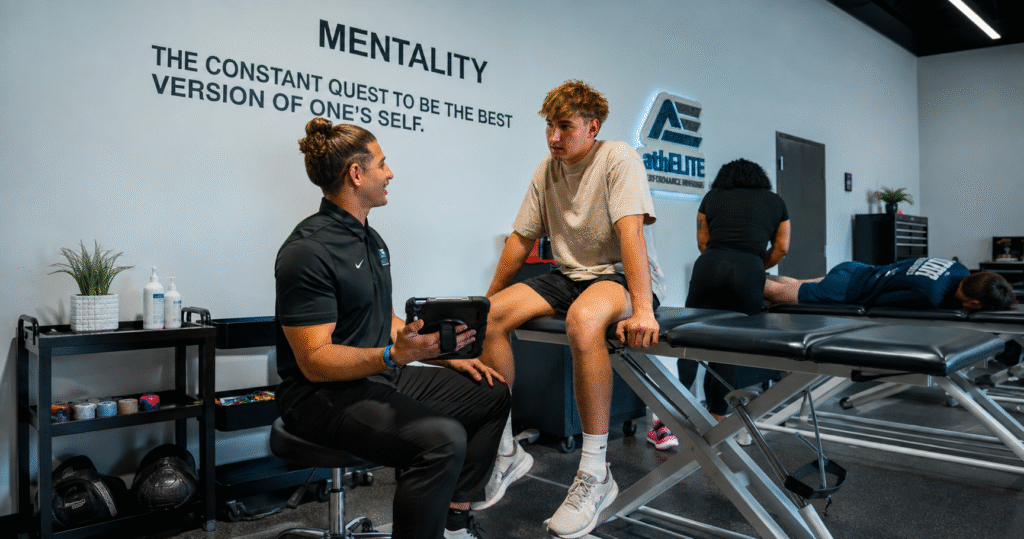
Why Athletes Should Stop Treating Pain as the Enemy
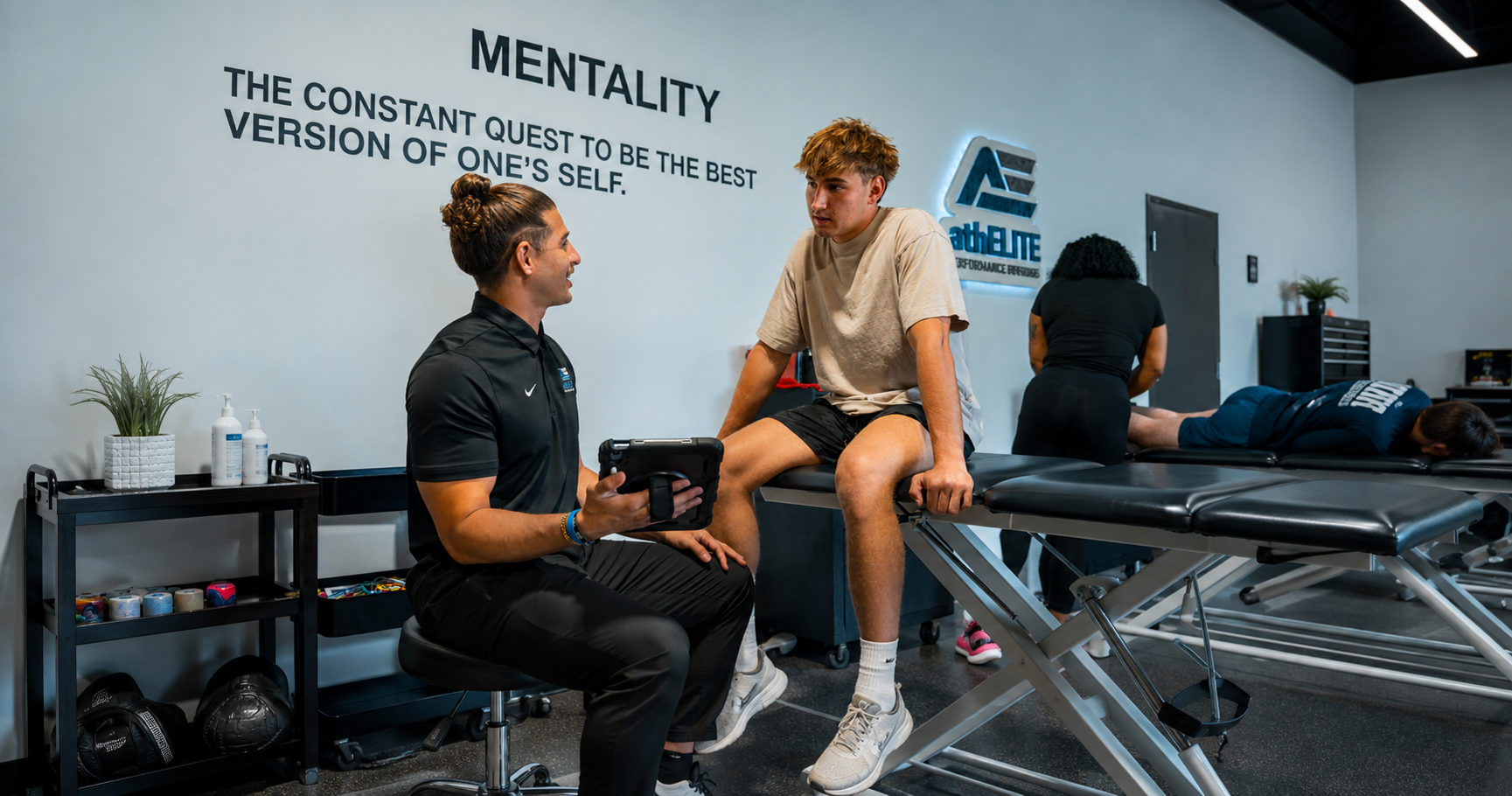
Pain is one of the biggest reasons athletes stop training.
A sore knee after practice. Pain during a jump. Discomfort while climbing stairs after a tournament. The natural reaction is to think something is wrong—and that pain should disappear before you move again.
But here’s the reality: pain is not always the enemy.
Pain is your body’s way of communicating that something deserves attention. Sometimes it’s warning you about an injury. Other times it’s responding to changes in training load, fatigue, stress, or reduced tissue capacity. Treating every painful experience as damage often leads athletes to avoid movement altogether, creating an even bigger problem.
At athELITE, we believe successful rehabilitation isn’t about eliminating every sensation of pain. It’s about understanding what pain means, building resilience, and gradually restoring your body’s ability to perform.
Pain Is Information, Not Always Damage
One of the most common misconceptions in sports is believing that pain automatically equals injury.
While acute injuries certainly deserve immediate evaluation, many athletes experience pain without significant structural damage. Tendons become sore after increased training volume. Muscles ache after heavy lifting. Knees may become irritated after several games in one weekend.
That doesn’t necessarily mean you’ve caused new damage.
Instead of asking:
“How do I make the pain disappear?”
A better question is:
“Why is my body responding this way?”
That shift in mindset changes rehabilitation completely. Rather than chasing temporary symptom relief, athletes begin addressing the factors that actually influence recovery: strength, movement quality, load management, sleep, and progressive training.
Clinical practice guidelines for musculoskeletal pain recommend remaining active and using exercise-based rehabilitation as a first-line treatment rather than relying solely on passive interventions.
The Problem With Fighting Pain
When athletes view pain as the enemy, they usually respond in one of two ways.
They stop moving completely.
Rest can be helpful after certain injuries, but prolonged avoidance often leads to weaker muscles, reduced tendon capacity, stiffness, and decreased confidence.
Or they ignore it entirely.
Playing through significant pain without modifying training can overload tissues that aren’t prepared for the demands being placed on them.
Neither extreme is ideal.
The goal isn’t complete rest or reckless training.
It’s learning how to load the body appropriately.
Your Knee Gets Stronger By Handling Load
Basketball places enormous demands on the knee.
Every jump, sprint, cut, and landing requires your muscles and tendons to absorb and produce force. If your rehabilitation only focuses on reducing pain, your knee may never rebuild the capacity needed to tolerate those movements.
This is where progressive loading becomes essential.
Progressive rehabilitation gradually exposes your knee to increasing levels of stress so your body can adapt safely. That may begin with basic strengthening, progress to single-leg control, then eventually include jumping, landing, deceleration, and basketball-specific movement.
Research in basketball athletes has shown that programs combining strength, neuromuscular training, mobility, and agility are effective for improving movement quality and reducing injury risk, reinforcing the importance of progressive rather than random rehabilitation.
Research consistently supports exercise-based rehabilitation and progressive loading as key components of managing musculoskeletal conditions and improving long-term function.
Pain doesn’t always mean you should stop.
Sometimes it means your program needs to be adjusted—not abandoned.
Confidence Is Part of Recovery
Ask almost any athlete returning from an ACL injury what scares them most.
It usually isn’t pain.
It’s trusting their knee again.
Confidence doesn’t magically return when swelling disappears. It returns through repeated successful movement.
Landing without hesitation.
Cutting confidently.
Completing drills without constantly thinking about the knee.
This is why rehabilitation should train both the body and the athlete.
Every successful repetition teaches your nervous system that movement is safe again. Every progression helps replace fear with confidence.
Studies on return-to-sport rehabilitation also emphasize that strength, movement quality, hop performance, and psychological readiness should all be considered before athletes return to competition—not pain alone.
That’s something passive treatments alone cannot accomplish.
Temporary Relief Isn’t the Finish Line
Massage.
Ice.
Taping.
Dry needling.
These treatments can absolutely have a place in rehabilitation. They may reduce discomfort and help athletes move more comfortably.
But they shouldn’t become the goal.
If an athlete feels great immediately after treatment but still lacks strength, balance, landing mechanics, or conditioning, they’re not necessarily ready for basketball.
Feeling better and being prepared are two different things.
The most successful rehabilitation programs use symptom relief to create an opportunity for movement—not as the final outcome.
How athELITE Approaches Pain
At athELITE, we don’t ask athletes to ignore pain.
We teach them how to understand it.
Every athlete begins with a comprehensive assessment where we evaluate movement quality, strength, symptoms, training history, and the demands of their sport. Instead of building a generic exercise program, we create a personalized rehabilitation plan that evolves as the athlete improves.
Each week, athletes meet with their physical therapist through a scheduled check-in call to review progress, discuss symptoms, answer questions, and adjust the program whenever necessary. As strength and confidence improve, exercises progress toward more dynamic basketball-specific movements.
We also believe objective testing is one of the most valuable tools in return-to-sport rehabilitation. Rather than relying on pain or time alone, we evaluate strength, movement quality, and performance to help determine readiness for competition.
Final Thoughts
Pain is not something athletes should fear.
It’s something they should learn from.
Sometimes it tells us we’ve exceeded our current capacity. Sometimes it reminds us that recovery is still in progress. And sometimes it simply reflects the normal demands of training and adaptation.
The goal of rehabilitation isn’t to eliminate every painful sensation.
It’s to build a stronger, more resilient athlete who can handle the demands of basketball with confidence.
At athELITE, we believe lasting recovery comes from progressive loading, individualized programming, expert coaching, and consistent accountability—not simply chasing temporary pain relief.
Because the strongest athletes aren’t the ones who never experience pain.
They’re the ones who know how to respond to it.