The Difference Between Rehab and Performance Rehab
For many athletes, the goal after an injury seems simple.
Get rid of the pain.
Finish physical therapy.
Get cleared.
Get back to playing.
But returning to sport is rarely that straightforward.
Many athletes reach the end of traditional rehabilitation and technically “graduate” from physical therapy. Their pain has improved. Their range of motion has returned. They are stronger than they were immediately after the injury. Yet once they step back onto the court, field, or playing surface, something still feels different.
They may feel slower.
Less explosive.
Less confident.
They may hesitate during cuts, avoid loading one side, or struggle to trust their body in situations that once felt automatic.
This experience is incredibly common, and it highlights an important distinction that many athletes never learn about.
Rehab and performance rehab are not the same thing.
While both are important, they serve different purposes. Understanding the difference can help athletes recover more completely and return to competition with greater confidence and preparedness.
What Is Traditional Rehabilitation?
Traditional rehabilitation focuses on restoring basic function after an injury or surgery.
Early stages of rehab often prioritize reducing pain, improving mobility, restoring range of motion, and rebuilding foundational strength. These goals are essential because they create the foundation for everything that follows.
For someone recovering from ACL reconstruction, patellar tendon pain, or another sports injury, restoring normal movement and rebuilding strength are critical first steps.
Traditional rehabilitation does an excellent job helping athletes recover from the initial effects of injury.
The challenge is that returning to normal daily activities is very different from returning to high level sports.
Walking without pain and playing basketball are not the same thing.
Research examining ACL rehabilitation and return to sport emphasizes that successful recovery extends beyond symptom reduction and basic strength restoration. Athletes often require additional preparation before safely returning to competition.
Why Being Cleared Does Not Always Mean Being Ready
Many athletes view medical clearance as the finish line.
Once they receive approval to return to activity, they assume they are fully prepared to perform.
Unfortunately, being cleared and being ready are not always the same thing.
Research published in the Journal of Orthopaedic & Sports Physical Therapy has shown that many athletes continue to demonstrate strength deficits, movement asymmetries, and performance limitations long after returning to sport.
These lingering deficits may not be obvious during everyday activities, but they often become noticeable during jumping, sprinting, cutting, and other high demand athletic movements.
This is one reason why some athletes feel physically healthy yet still struggle to perform at their previous level.
What Is Performance Rehab?
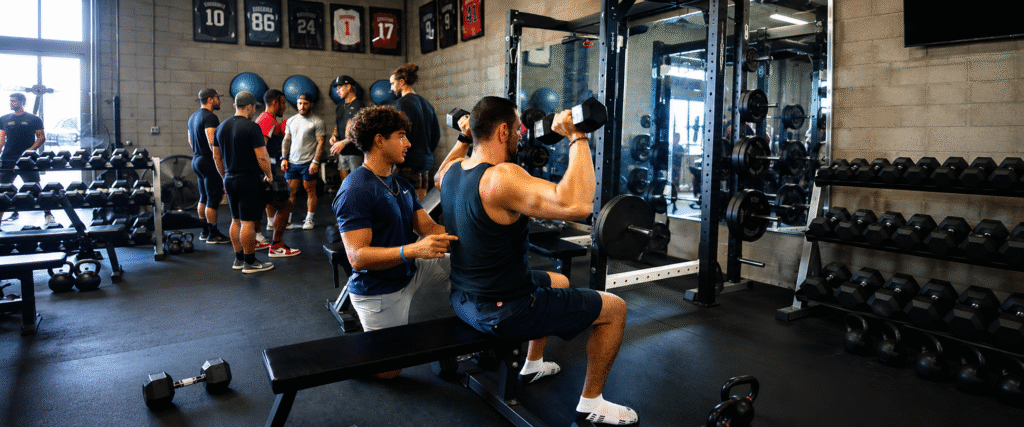
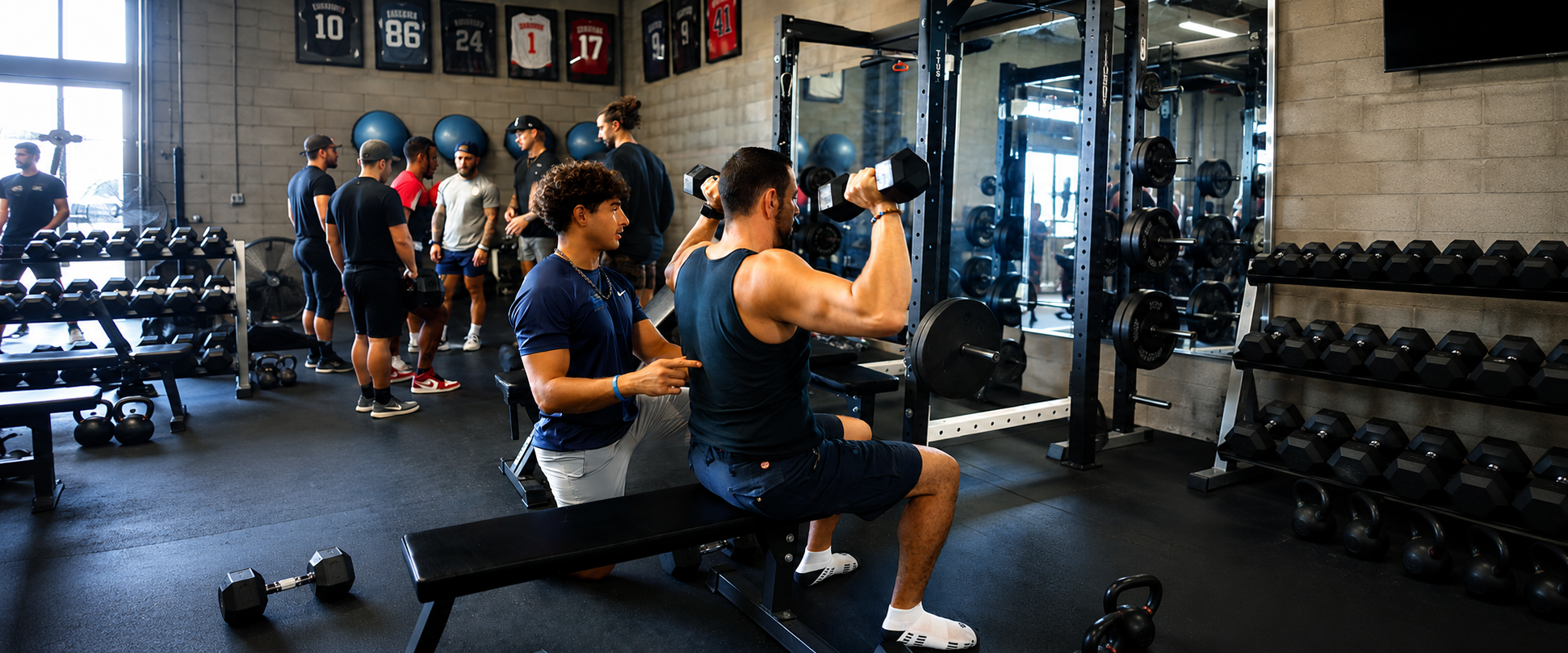
Performance rehab bridges the gap between injury recovery and athletic performance.
Instead of focusing solely on pain reduction and restoring basic function, performance rehab prepares athletes for the specific demands of their sport.
This means addressing qualities such as:
- Explosiveness
- Force production
- Deceleration control
- Jumping and landing mechanics
- Change of direction ability
- Power development
- Sport specific conditioning
- Confidence during competition
The goal is not simply to survive competition.
The goal is to return prepared to perform.
For basketball athletes, that means being able to sprint, jump, land, cut, and react under pressure. For soccer athletes, it means tolerating repeated accelerations and changes of direction. Every sport places unique demands on the body, which is why rehabilitation should eventually become increasingly sport specific.
Strength Alone Is Not Enough
Strength is a critical component of recovery.
After an injury, athletes often experience muscle loss, reduced force production, and declines in athletic performance. Rebuilding strength is essential.
However, strength alone does not guarantee readiness for sport.
Research examining return to sport after ACL reconstruction suggests that successful outcomes depend on more than isolated strength measures. Movement quality, neuromuscular control, confidence, and sport specific demands all play important roles in recovery.
An athlete may squat impressive numbers in the weight room and still struggle with landing mechanics, cutting movements, or single leg control.
Sports happen in dynamic environments.
Performance rehab helps athletes learn how to use their strength effectively when it matters most.
Why Return to Sport Testing Matters
One of the biggest misconceptions in sports medicine is that time determines readiness.
Athletes often hear that they should return at six months, nine months, or one year following surgery.
But recovery does not follow a calendar.
Research continues to support the use of objective measures when making return to sport decisions. Assessments such as strength testing, hop testing, and movement analysis can identify deficits that may still exist even when athletes feel ready.
These findings highlight the importance of using data to guide decisions rather than relying solely on symptoms or timelines.
At athELITE, we use return to sport testing technology to evaluate movement quality, asymmetries, force production, and overall readiness for competition.
This helps athletes understand where they are in the recovery process and what areas still require attention before returning to unrestricted play.
Performance Rehab Includes Real Game Movements
Sports are unpredictable.
Athletes are required to react quickly, make decisions under pressure, and move efficiently while fatigued.
These situations cannot be fully replicated with basic exercises alone.
Performance rehab introduces progressively more demanding movements that reflect the realities of competition.
For basketball players, this may include:
- Jumping and landing drills
- Deceleration training
- Change of direction work
- Reactive movement
- Power development
- Basketball specific conditioning
The purpose is to gradually expose athletes to the demands they will face once they return to competition.
Without this progression, athletes may return to sport physically recovered but athletically underprepared.
Confidence Is Part of Performance
Recovery is not just physical.
Many athletes regain strength before they regain trust in their body.
Research published in the British Journal of Sports Medicine has shown that psychological readiness plays an important role in successful return to sport outcomes. Fear of reinjury and lack of confidence can influence both performance and return to play rates.
Confidence is not rebuilt through rest.
It is rebuilt through preparation.
As athletes successfully progress through increasingly challenging movements, they begin to trust their body again.
That confidence often becomes one of the missing pieces between being medically cleared and feeling truly ready to compete.
Technology Is Changing Sports Rehabilitation
Modern rehabilitation has evolved far beyond simple observation.
Today, clinicians can use objective data to better understand how athletes move and perform throughout recovery.
Using sports performance testing technology, clinicians can assess force production, movement quality, asymmetries, and readiness for sport.
These measurements help provide clarity during the rehabilitation process and allow athletes to make more informed decisions about their return to competition.
At athELITE, technology is used to bridge the gap between rehabilitation and performance, helping athletes move beyond pain relief and toward complete recovery.
The Goal Is Not Just to Return
Too often, athletes define success by whether they are able to get back on the court or field.
But simply returning is not always enough.
The goal should be to return with confidence.
To return with strength.
To return prepared.
Performance rehab recognizes that recovery is about more than eliminating pain. It is about rebuilding the physical and mental qualities necessary to perform at a high level.
For athletes, that distinction matters.
Because there is a difference between being healthy enough to play and being prepared to perform.
Final Thoughts
Traditional rehabilitation provides the foundation for recovery, but performance rehab helps athletes bridge the gap between healing and competing.
Pain reduction and strength restoration are important milestones, but they should not be the final destination.
Athletes need to rebuild movement quality, power, confidence, and the ability to tolerate the demands of their sport.
At athELITE, we combine athlete focused rehabilitation, performance training, and advanced return to sport technology to help athletes recover with confidence and return to competition prepared for the demands of their sport.
If you’re recovering from an injury and want more than simply being pain free, performance rehab may be the missing piece that helps you return stronger than before.