The Hidden Deficits Athletes Still Have After Rehab
An athlete finishes physical therapy.
Their knee feels better.
They’re stronger than they were a few months ago.
Their physical therapist tells them they’re doing well, and eventually they’re cleared to return to sport.
Everything should be back to normal.
Except it isn’t.
They don’t jump as high.
They hesitate before changing direction.
They avoid planting on their injured leg.
They feel slower than they used to.
Most importantly, they don’t feel like themselves.
This is one of the most common experiences athletes have after completing rehabilitation, and it often comes down to something they can’t see.
Hidden deficits.
These are physical and performance limitations that remain even after pain has improved and formal rehabilitation has ended. While athletes may appear healthy on the outside, these deficits can influence performance, confidence, and potentially increase the risk of future injuries if they are not identified and addressed.
The goal of rehabilitation should never be to simply get athletes out of pain.
It should prepare them for everything their sport demands.
What Are Hidden Deficits?
Hidden deficits are physical impairments that are not always obvious during everyday activities but become apparent when athletes perform demanding sports movements.
An athlete may walk normally, complete basic strengthening exercises, and even feel pain free.
However, once they begin sprinting, jumping, landing, cutting, or reacting under pressure, weaknesses often become much more noticeable.
These deficits may include:
- Reduced strength in the injured leg
- Lower power production
- Poor balance
- Movement asymmetries
- Decreased jumping ability
- Altered landing mechanics
- Reduced confidence
- Slower reaction time
Many of these issues cannot be identified simply by asking an athlete how they feel.
They require objective evaluation.
Why Pain Is a Poor Measure of Recovery
One of the biggest misconceptions in sports rehabilitation is believing that pain determines readiness.
Pain tells us whether something is irritated.
It does not tell us whether an athlete is prepared to compete.
An athlete can be completely pain free while still lacking the strength, coordination, power, and movement quality necessary for basketball or other high demand sports.
Research examining ACL rehabilitation and return to sport emphasizes that successful recovery extends beyond symptom resolution and includes restoring strength, neuromuscular control, psychological readiness, and sport specific function.
Strength Deficits Often Persist
Strength is usually one of the first things clinicians evaluate after injury.
Unfortunately, regaining enough strength for daily life is very different from rebuilding the strength needed for sport.
Research has shown that many athletes continue to demonstrate measurable strength deficits months after returning to competition.
These deficits are often most noticeable during single leg activities where one side must independently generate and absorb force.
Even relatively small side to side differences may influence athletic performance.
Power Is Different Than Strength
Strength allows athletes to produce force.
Power allows athletes to produce force quickly.
Sports rely heavily on power.
Basketball players explode toward the basket.
Volleyball players jump repeatedly.
Soccer players accelerate in a fraction of a second.
Many athletes regain basic strength before they regain explosive power.
Without restoring power, they often feel slower, less explosive, and less athletic even though traditional rehabilitation has technically ended.
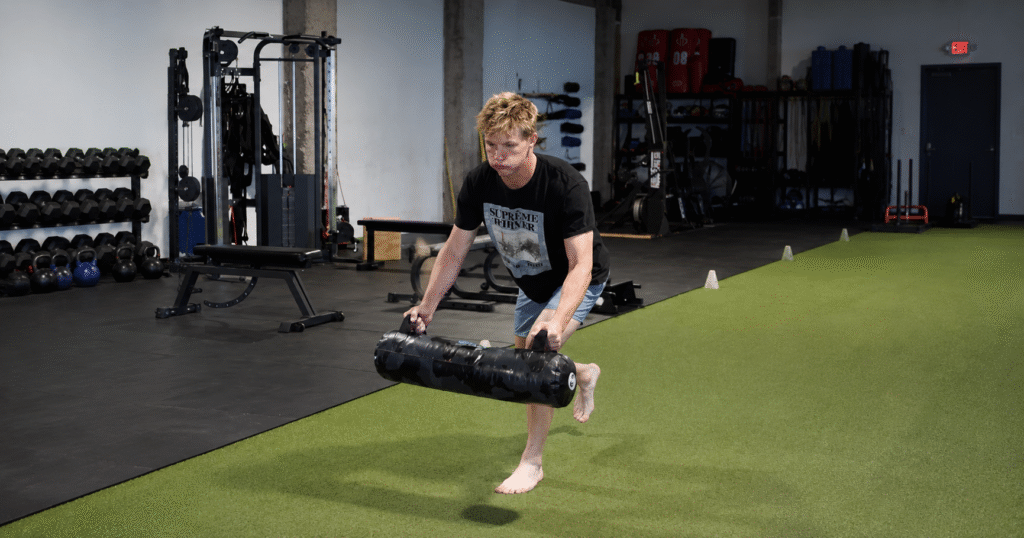
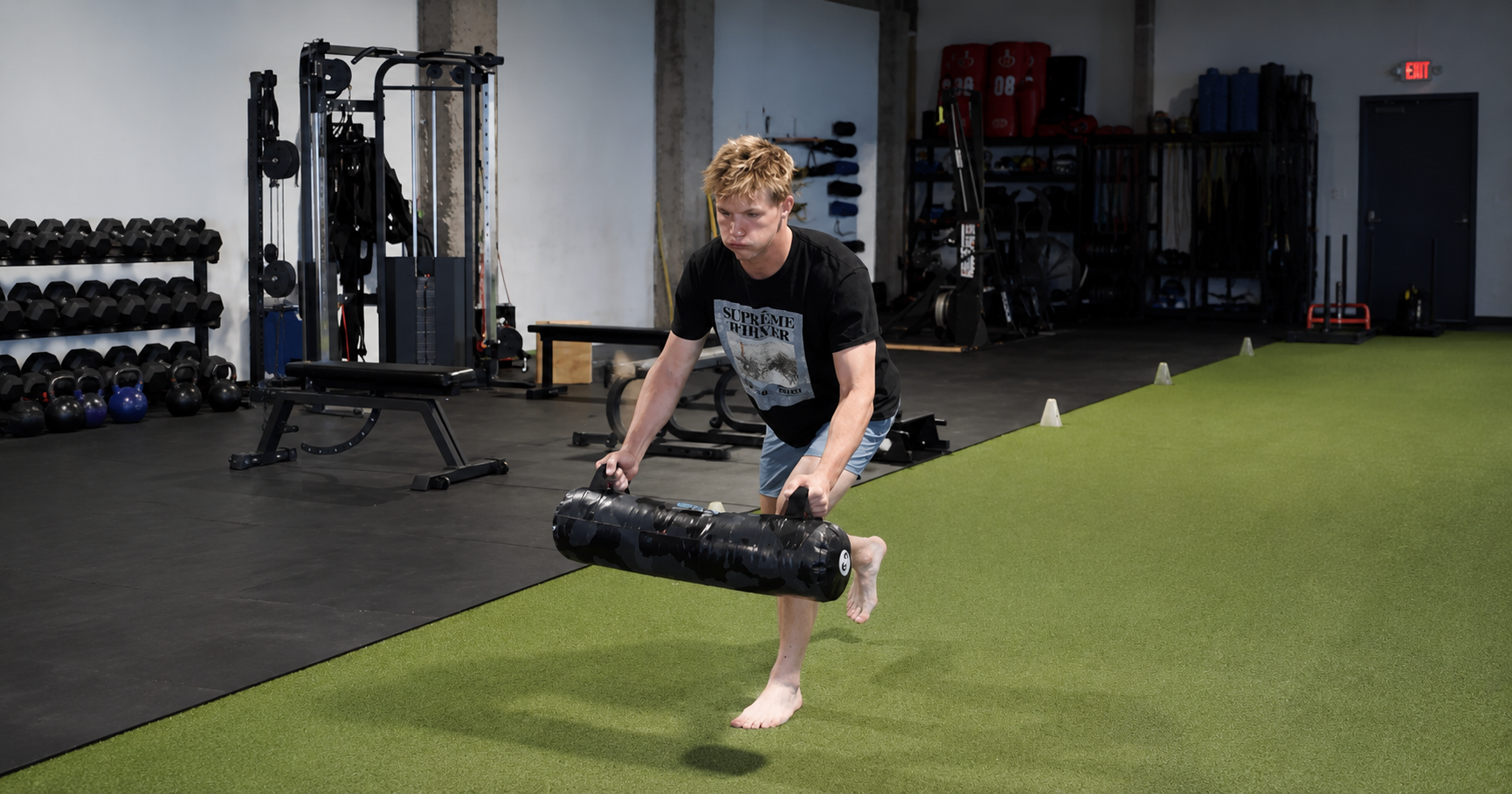
Performance rehab addresses this gap through progressive power development and sport specific training.
Movement Quality Still Matters
Athletes do not simply need stronger muscles.
They need efficient movement.
Research examining lower extremity biomechanics has shown that movement quality influences how forces are distributed throughout the body during athletic tasks.
Athletes recovering from injury commonly demonstrate:
- Stiffer landings
- Poor single leg control
- Reduced hip stability
- Altered cutting mechanics
- Compensatory movement patterns
These compensations often develop subconsciously.
Athletes may not even realize they are moving differently.
Confidence Is a Hidden Deficit Too
Not every hidden deficit is physical.
Confidence may be one of the most overlooked components of recovery.
Research published in the British Journal of Sports Medicine has shown that psychological readiness plays an important role in successful return to sport.
Athletes may have the physical ability to perform but still hesitate because they do not fully trust their body.
That hesitation can affect movement quality, decision making, and overall performance.
Confidence is not something that automatically returns with time.
It develops through preparation.
Why Objective Testing Matters
Hidden deficits cannot always be seen.
They must be measured.
This is where objective testing becomes incredibly valuable.
Rather than relying on timelines or feelings, clinicians can evaluate measurable qualities including:
- Force production
- Jump performance
- Strength symmetry
- Landing mechanics
- Balance
- Change of direction ability
- Power output
Research has shown that athletes who fail to meet objective return to sport criteria may have an increased risk of sustaining another ACL injury after returning to competition.
Objective testing helps identify these deficits before athletes resume unrestricted play.
Hidden Deficits Affect Performance Too
Many athletes think hidden deficits only matter because of injury risk.
They also influence performance.
An athlete with reduced power may lose vertical jump height.
An athlete with poor force production may feel slower during acceleration.
An athlete lacking confidence may hesitate during critical game situations.
These deficits can limit performance long before they cause pain.
Identifying them early gives athletes the opportunity to improve before returning to full competition.
Rehabilitation Should Prepare Athletes for Sport
Traditional rehabilitation builds the foundation.
Performance rehab builds the athlete.
As rehabilitation progresses, athletes should gradually transition from basic exercises toward activities that resemble the demands of competition.
This includes:
- Jumping
- Landing
- Sprinting
- Deceleration
- Cutting
- Reactive drills
- Sport specific conditioning.
The Goal Is More Than Being Cleared
Being cleared is an important milestone.
It is not the finish line.
Athletes deserve to understand how their body performs before returning to competition.
They deserve measurable information.
They deserve confidence.
And they deserve rehabilitation that prepares them for the real demands of their sport.
Hidden deficits may not always be obvious.
But ignoring them can influence both performance and recovery.
Final Thoughts
Successful rehabilitation is about much more than eliminating pain.
Athletes also need to restore strength, power, movement quality, confidence, and sport specific performance before returning to competition.
At athELITE, we combine athlete focused rehabilitation, performance training, and advanced return to sport technology to identify hidden deficits and help athletes return stronger, more confident, and fully prepared for the demands of their sport.
Because the goal isn’t simply to finish rehab.
It’s to return to sport without leaving anything behind.